Combined Webb-Hubble Image of Whirlpool Galaxy Reveals Hidden Secrets of Star Birth
Breaking: Webb and Hubble Team Up to Decode Stellar Nurseries in Iconic Galaxy
A stunning new composite image of the Whirlpool Galaxy, M51, is giving astronomers unprecedented insight into the earliest moments of star formation. The image merges infrared data from NASA’s James Webb Space Telescope with visible-light observations from the Hubble Space Telescope, revealing intricate structures of gas, dust, and young stars that were previously impossible to see.
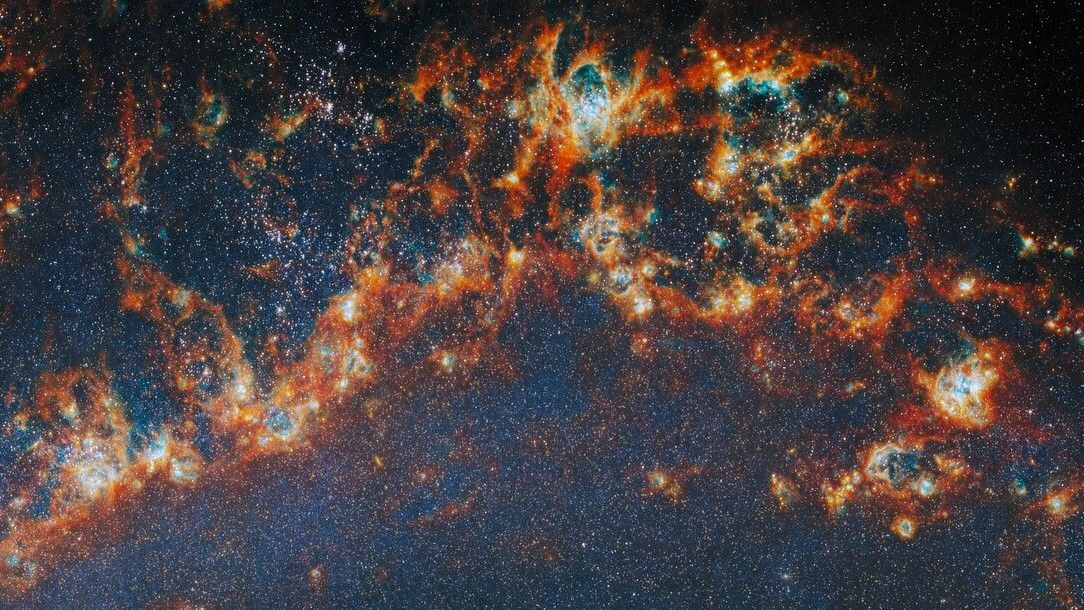
“This is like opening a door to a room we knew was there but could never fully illuminate,” said Dr. Sarah Klein, an astrophysicist at the Space Telescope Science Institute. “We are finally able to trace the full cycle of star birth from dense cloud to glowing protostar.”
Background: The Whirlpool Galaxy and the Mystery of Star Formation
The Whirlpool Galaxy, located roughly 31 million light-years away in the constellation Canes Venatici, is a classic example of a grand-design spiral galaxy. Its prominent arms and active star-forming regions have made it a favorite target for telescopes since the 18th century.
One of the biggest unanswered questions in astronomy is exactly how massive clouds of gas and dust collapse to form stars. The process is hidden behind thick cocoons of material that block visible light, requiring infrared observations to penetrate the veil.
“Hubble showed us the beautiful spiral structure and the hot, young stars. But Webb’s infrared eyes let us see through the dust to the cold, dense cores where stars are just being born,” explained Dr. Klein.
Key Findings from the New Image
The composite image reveals several key features that are helping solve the star-formation puzzle:
- Filamentary dust lanes – Webb’s MIRI instrument shows long, thin filaments of silicate-rich dust that may act as “birth canals” for new stars.
- Embedded protostars – Hundreds of small, bright infrared points are identified as protostars in the earliest stages of formation, many never seen before.
- Outflow cavities – Dark voids around some protostars indicate powerful outflows that clear away surrounding gas, a critical step in halting star formation.
“The level of detail is astonishing,” said Dr. Klein. “We can literally see the same process happening in dozens of locations across the galaxy, giving us a statistical sample to test our models.”
What This Means: A New Era of Star Formation Studies
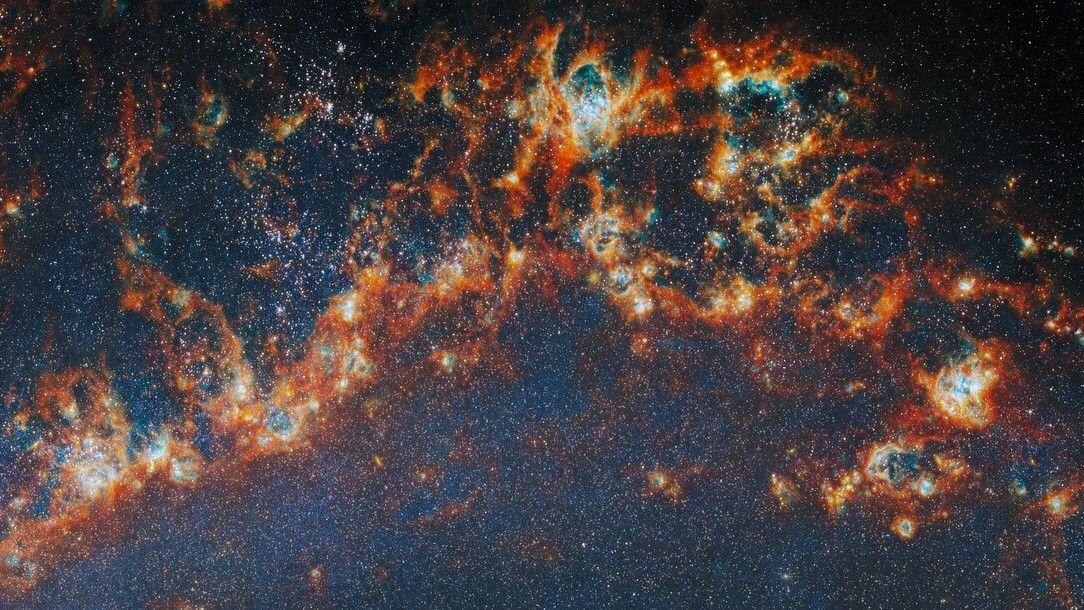
The combined data from Webb and Hubble allow astronomers to compare the thermal emission from cold dust (Webb) with the scattered light from young stars (Hubble). This multi-wavelength view provides a complete, cradle-to-grave picture of stellar nurseries.
These observations are expected to refine computer simulations of star formation significantly. Current models often struggle to predict the efficiency of star formation—how much gas actually turns into stars. The new image provides real-world benchmarks.
“This is a milestone for understanding how galaxies build stars over cosmic time,” said Dr. Klein. “What we learn from M51 can be applied to distant galaxies in the early universe, helping us piece together the history of the cosmos.”
The research team plans to release a full dataset and analysis in the coming weeks, with follow-up observations targeting other nearby spiral galaxies. The ultimate goal is to answer the question: What controls the birth of stars? The Whirlpool Galaxy, caught in this stunning new light, is now the key to unlocking that answer.