Mars ESCAPADE Mission: Exploring the Red Planet's Atmosphere - Q&A with Dr. Robert Lillis
In a recent episode of This Week In Space, co-hosts Rod Pyle and Tariq Malik sat down with Dr. Robert Lillis, a leading scientist from the University of California, Berkeley, to discuss the exciting ESCAPADE mission to Mars. This mission, short for Escape and Plasma Acceleration and Dynamics Explorers, aims to unravel the mysteries of Mars' upper atmosphere and its interaction with solar wind. Below, we dive into the key details through a series of questions and answers derived from that insightful conversation.
What is the ESCAPADE mission and what are its primary goals?
ESCAPADE stands for Escape and Plasma Acceleration and Dynamics Explorers. It is a NASA-funded mission that will send two identical small satellites, or CubeSats, to orbit Mars. The primary goal is to study how solar wind strips away the Martian atmosphere over time. By measuring plasma and magnetic fields around the planet, the mission aims to understand the processes that cause atmospheric erosion, which is key to explaining why Mars lost its once-thick atmosphere and liquid water. This will help scientists piece together the planet's climate history and its potential for past habitability.
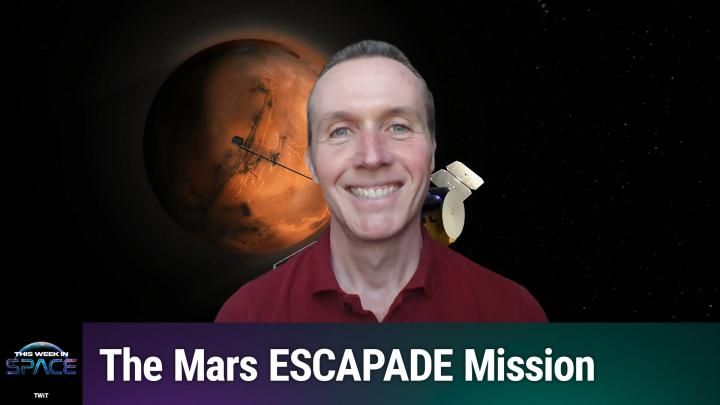
Who is Dr. Robert Lillis and what is his role in ESCAPADE?
Dr. Robert Lillis is a planetary scientist at the Space Sciences Laboratory at the University of California, Berkeley. He serves as the Principal Investigator for the ESCAPADE mission, meaning he leads the scientific team and oversees all aspects of the mission's research objectives. With extensive experience in Mars' upper atmosphere and ionosphere, Dr. Lillis has contributed to multiple Mars missions, including MAVEN. In the podcast, he shared his excitement about using innovative small satellite technology to answer fundamental questions about Mars' atmospheric evolution.
Why is studying Mars' atmosphere important for understanding the planet's history?
Mars' atmosphere today is very thin and dry, but evidence suggests it was once thick and supported liquid water on the surface. Understanding how and why the atmosphere changed over billions of years is crucial for reconstructing Mars' climate history. The ESCAPADE mission focuses on the process of atmospheric escape, where solar wind and radiation strip particles from the upper atmosphere. By quantifying current escape rates and mechanisms, scientists can extrapolate back in time to estimate the rate at which Mars lost its atmosphere. This knowledge not only explains Mars' transformation but also informs our understanding of planetary habitability across the solar system.
How will the two CubeSats work together to achieve ESCAPADE's science objectives?
The ESCAPADE mission will deploy two identically instrumented CubeSats into Mars orbit. They will fly in a coordinated formation, allowing them to measure simultaneous phenomena at different locations. This dual-spacecraft approach is key to distinguishing spatial from temporal variations in the plasma environment. For example, one satellite might detect a burst of escaping particles while the other measures the incoming solar wind, providing a complete picture. The instruments include magnetometers, ion and electron sensors, and a plasma wave detector. Together, they will map the Martian magnetosphere and study how solar wind interacts with the planet's weak magnetic fields and ionosphere.
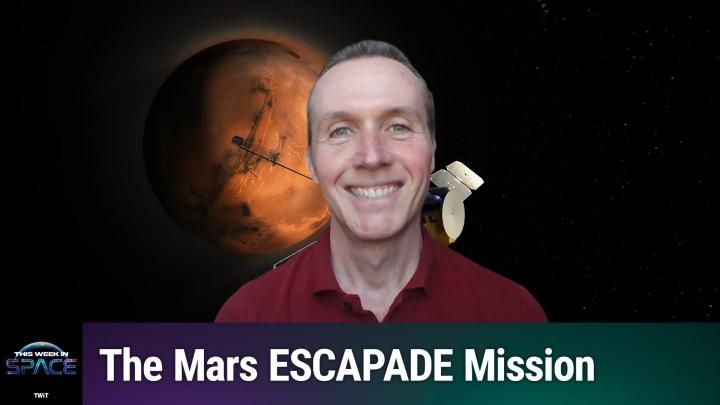
What makes ESCAPADE unique compared to previous Mars missions like MAVEN?
While NASA's MAVEN mission also studies Mars' atmosphere, ESCAPADE offers several unique advantages. First, it uses two small, low-cost CubeSats, demonstrating a new paradigm for planetary science. This allows for simultaneous multipoint measurements, which MAVEN, with a single spacecraft, cannot do. Second, ESCAPADE's orbit is specifically designed to sample the wake region behind Mars (the downwind side) and the upstream solar wind, providing a complete view of the escape process. Finally, the mission's focus on plasma acceleration and dynamics complements MAVEN's broader atmospheric studies, offering higher resolution in certain areas.
What are the main challenges in designing and operating a mission like ESCAPADE?
One major challenge is the miniaturization of instruments for CubeSats. Scientists had to pack powerful sensors into a very small volume, with limited power and data downlink capability. Another challenge is the navigation of two small spacecraft in Mars orbit while maintaining formation without active propulsion for adjustments. The mission relies on innovative orbital design and careful planning. Dr. Lillis noted that the teams at UC Berkeley and NASA have overcome these hurdles through rigorous testing and collaboration. Additionally, the mission must withstand the harsh radiation environment of deep space, requiring robust shielding and reliable electronics.
When is ESCAPADE expected to launch, and what are the next steps?
As of the podcast recording, the ESCAPADE mission is scheduled to launch no earlier than 2024 as part of NASA's Small Innovative Missions for Planetary Exploration (SIMPLEx) program. It will ride as a secondary payload on a rocket, reducing costs. After launch, the two CubeSats will take about 11 months to travel to Mars before entering orbit. The next steps include final assembly and testing of the spacecraft, integration with the launch vehicle, and preparation for operations. Dr. Lillis expressed optimism that the mission will provide groundbreaking insights into Mars' atmospheric escape and pave the way for future small satellite missions to other planets.