How Spotify Engineers Craft Your Year in Music: A Step-by-Step Guide to the Wrapped Magic
Introduction
Have you ever wondered how Spotify transforms your listening habits into a personalized, story-driven experience like Wrapped? Every December, millions of users discover their top songs, artists, and genres, but behind the scenes, a complex tapestry of data science, engineering, and design weaves together to create that magic. This guide breaks down the step-by-step process engineers use to identify your most interesting listening moments and tell a compelling story about them.
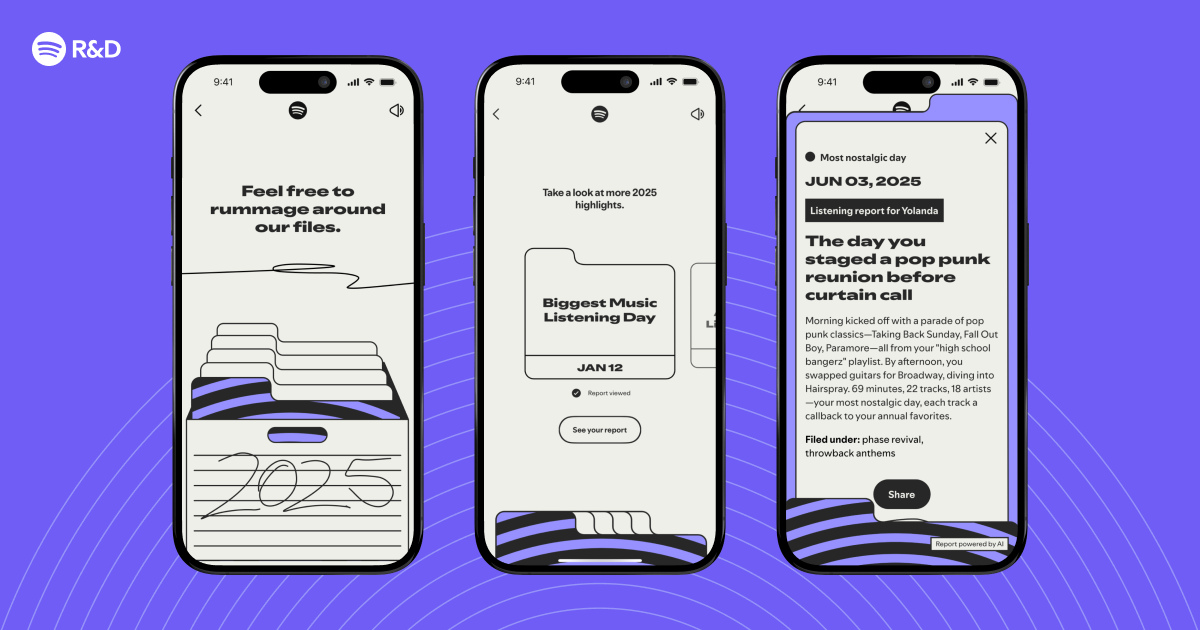
What You Need (Prerequisites & Materials)
To build a Wrapped-like experience, you’ll need the following components and knowledge:
- Streaming Data Pipeline: A system that captures every play event (song, timestamp, duration, skip, repeat) from millions of users.
- Big Data Storage: A scalable data lake (e.g., Hadoop, BigQuery) to store petabytes of listening history.
- Machine Learning Models: Algorithms for clustering, trend detection, and personalization (e.g., collaborative filtering, NLP for podcast topics).
- Statistical Analysis Toolkit: Tools to compute percentiles, trends, and anomalies (e.g., Python with pandas, Spark).
- Storytelling Framework: A narrative engine that maps data points to emotional arcs (e.g., “Your Summer Anthem” vs. “Late-Night Sessions”).
- Visualization Software: Frontend libraries (like D3.js) to generate shareable cards, animations, and interactive elements.
- User Privacy & Ethics Guidelines: Ensure compliance with regulations (GDPR, CCPA) and user consent for data usage.
Step-by-Step Guide
Step 1: Collect and Clean the Raw Stream Data
Every second, Spotify’s servers log play events. Engineers begin by aggregating a full year of data for each user. This step involves:
- Ingesting streaming logs from multiple microservices, filtering out test accounts and bots.
- Normalizing timestamps to UTC and deduplicating entries caused by network retries.
- Removing silent or partial plays (e.g., anything under 30 seconds unless it’s a deliberate skip).
- Mapping track IDs to metadata (artist, album, genre, popularity score).
At this stage, the raw data resembles a massive spreadsheet with billions of rows – one per listen. Engineers ensure data integrity using checksums and anomaly detection.
Step 2: Compute Personal Statistics
Once the data is clean, engineers run batch jobs to calculate per-user metrics:
- Top Artists & Tracks: Count total plays, weighted by recency (more recent plays get a slight boost to reflect evolving taste).
- Total Listening Time: Sum durations, segmented by day of week, hour, and season.
- Genre & Mood Breakdown: Using genre tags from metadata and acoustic features (e.g., danceability, energy) from Spotify’s Audio Analysis API.
- Unique Artists & Diversity Score: Count distinct artists and compute a Shannon entropy index to measure how varied your listening is.
These statistics form the foundation of every Wrapped card. Engineers also generate “first listen” timestamps – the moment you discovered an artist or song that later became a top favorite.
Step 3: Identify Interesting Listening Moments
This is where the magic happens. Engineers apply heuristics and machine learning to surface stories. They look for patterns like:
- Breakout Artists: An artist you discovered in March and then obsessed over, moving from zero plays to top 5 by year-end.
- Seasonal Shifts: Summer road trip playlist spikes vs. winter cozy acoustic sessions.
- Emotional Peaks: Late-night listening sessions after midnight on weekdays – often linked to studying or winding down.
- Genre Jumps: Sudden transitions from classical to hip-hop in the same week, indicating a change in mood or activity.
- Shared Moments: Collaborating on a playlist with friends or listening to the same song within minutes of each other (with privacy preserved).
Engineers use clustering algorithms (like k-means on time-series features) to group similar listening behaviors and then rank them by surprise factor. The top 3-5 moments become candidates for the narrative.
Step 4: Build the Story Arc
With raw statistics and interesting moments in hand, the team crafts a personalized narrative. This step involves:
- Selecting a theme: Based on predominant mood (e.g., “Your Year of Exploration” vs. “Consistent Vibes”). Use a decision tree – if diversity > 0.8 and discovery rate > 20%, choose “Adventurer” theme.
- Ordering the cards: Start with a hook (total minutes), build with discoveries, reach a climax (top artist). End with a reflective card (genres you returned to throughout the year).
- Writing copy: Engineers create template sentences that merge with the data. For example: “You listened to like a dedicated fan – here’s the playlist we curated just for you.”
- Adding visual assets: Color palettes are dynamically generated from the user’s top album covers. Animations (like spinning records) run smoothly thanks to optimized Canvas rendering.
All stories are tested on a sample of users beforehand to ensure they feel personal and accurate, not generic.

Step 5: Generate Shareable Assets
Wrapped is meant to be shared. Engineers build a pipeline that produces:
- Static images: JPEG/PNG cards optimized for Instagram, Twitter, and TikTok.
- Interactive web app: A single-page React application that steps through the story with animations.
- Video reel: For users who want a quick motion recap, a server-side FFmpeg script stitches together cards with transitions.
- Personalized playlist: A companion “Top Songs 2025” playlist automatically created via the Spotify API.
Each asset is compressed and cached via CDN to handle the global surge on launch day. Engineers also implement rate limiting and graceful degradation to prevent crashes.
Step 6: Validate, Monitor, and Deliver
Before pushing to production, the team runs A/B tests on 1% of users to check for:
- Data accuracy: Do the top artists match what the user expects? If not, adjust weighting formulas.
- Load testing: Simulate 10x normal traffic to ensure servers scale.
- Privacy audit: Ensure no raw data leaks (e.g., exact listen timestamps are rounded to hours).
On release day, engineers monitor dashboards for latency, errors, and user engagement (share rate, time spent). If any metric drops, they can roll back feature toggles immediately.
Tips for Your Own Wrapped Project
- Start small: Instead of processing a full year, try analyzing one month of listening data from your own library using Spotify’s Web API.
- Emphasize anomalies: Users love unexpected insights like “You listened to a Christmas song in July.” Program a ‘weird fact’ detector.
- Respect privacy: Always aggregate data at the user level and never expose raw event logs.
- Iterate with feedback: After launch, survey users about which stories felt fake vs. true. Tweak thresholds.
- Make it delightful: Add tiny surprises, like a hidden card that only appears if a specific condition is met (e.g., listening to a song 100 times).
Building a Wrapped experience is equal parts data engineering and storytelling. By following these steps, you can create your own system that turns raw streams into meaningful narratives – just like Spotify does for 500 million users every year.